


-
-
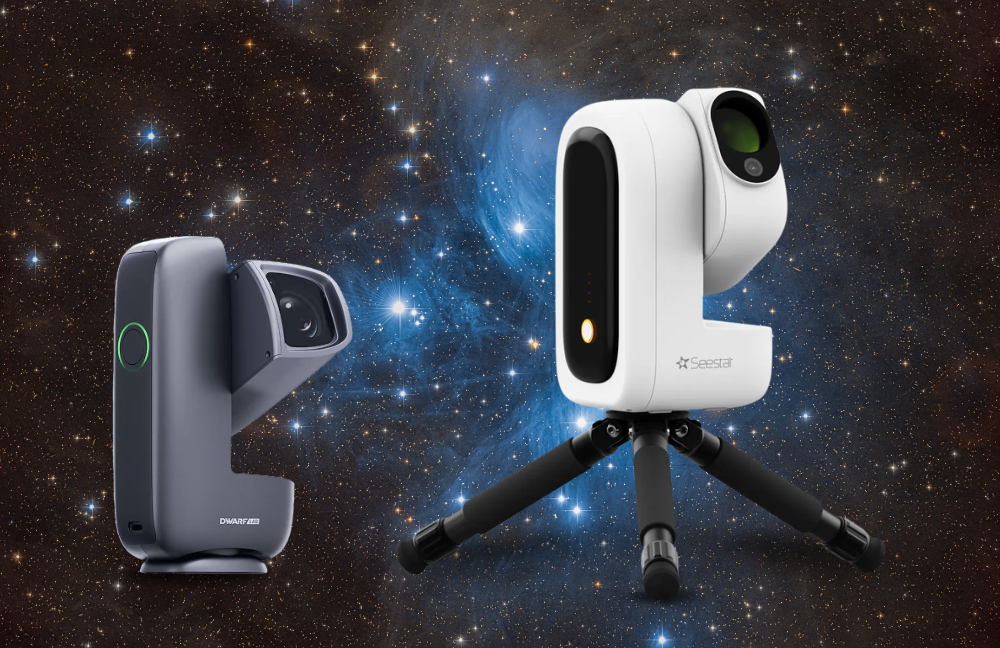
SMART telescopes: which one should you choose?
September 04 2026 -

What are the different types of clouds?
July 28 2026


What to observe tonight? A journey through the wonders of the summer sky
On warm summer evenings, when the search for a little relief from the heat becomes ever more pressing, there is nothing better than spending time observing the night sky. Summer is, in fact, one of the best seasons to admire stars, planets, constellations, and many other fascinating celestial objects visible in the summer sky.
If someone argues that these celestial wonders offer little relief from the summer heat, our answer is that we like to believe the beauty of the Universe has the power to make us forget the temperature for a while, allowing our minds to drift freely through the vastness of the cosmos, guided by the astronomical wonders that fill summer nights.
M57: The Ring Nebula in Lyra

Messier 57, M57, Ring Nebula, NGC 6720. Credit: The Hubble Heritage Team (AURA/STScI/NASA). Source: https://science.nasa.gov/asset/hubble/the-ring-nebula-m57/
To begin with, among the summer celestial objects worthy of attention, we certainly cannot overlook M57, the Ring Nebula in Lyra. It is located in the constellation of the same name, which stands high above the horizon in the summer sky and is one of the most fascinating targets for astronomical observation during summer nights.
Although Lyra is a relatively small constellation composed mostly of rather faint stars, it is easy to identify thanks to Vega, one of the brightest stars in the entire night sky.
M57 is actually a fairly small object, with an apparent diameter nearly thirty times smaller than that of the Moon. However, it is relatively bright for a planetary nebula, making it accessible even with small telescopes. At magnifications of around 40×, its distinctive tiny oval ring shape can already be recognized. One example is the SkyWatcher SkyHawk 114/900 EQ1 Newtonian telescope.
Located just over 2,000 light-years away and spanning a real diameter about 1,500 times that of our Solar System, M57 is a fascinating object to observe because it acts, in a way, like a time machine. It offers us a glimpse of what our own Sun may look like in the very distant future.
What we see through the telescope are the outer layers of a star once similar to the Sun. At the end of its evolutionary life, the star expanded dramatically, ejecting its outermost layers into space. All that remains is a tiny object at the center of the nebula, visible only with telescopes of at least 300 mm (12 inches) in aperture, known as a white dwarf. This final stage represents the ultimate fate that also awaits our own star.
M13: The Great Globular Cluster in Hercules

M13: The Great Globular Cluster in Hercules. Image Credit & Copyright: R. Jay Gabany. Source: https://apod.nasa.gov/apod/ap250814.html
Another fascinating astronomical object to observe during summer can be found in the constellation of Hercules, which also rises high in the night sky throughout the summer season.
In this case, the constellation itself is not particularly easy to identify, as it contains no especially bright stars. Nevertheless, it is well worth locating because it is home to M13, the famous Great Globular Cluster in Hercules, widely regarded as the most spectacular globular cluster in the Northern Hemisphere. Under exceptionally clear skies, its core can even be glimpsed with the naked eye. However, M13 truly becomes a breathtaking celestial object when observed through a telescope with an aperture of at least 150 mm (6 inches), such as the SkyWatcher Explorer Newtonian telescope, revealing a dense cluster of tiny stars, more easily resolved around its outer regions. The globular cluster has an apparent diameter much smaller than that of the Moon, while toward its center the stars blend together into a faint, nebulous glow.
Located about 23,000 light-years away and measuring approximately 360 light-years in diameter, M13 is a very different astronomical object from those discussed previously and represents a physical environment completely unlike that of our Solar System. It consists of several hundred thousand stars packed extremely close together, all of them remarkably old, having formed at least 12 billion years ago.
The average distance between these stars is about one hundred billion kilometers, roughly 500 times smaller than the average distance separating our Sun from its nearest stellar neighbors. This extraordinary proximity means that, if we were inside a globular cluster such as M13, we would experience a milky sky permanently illuminated by a diffuse white glow. Because of the overwhelming combined brightness of the surrounding stars, no individual star would actually stand out. Beneath such a sky, nothing would change enough to give us any real perception of the passing of days.
M11: The Wild Duck Cluster

M11: The Wild Duck Cluster. Credit & Copyright: Jean-Charles Cuillandre (CFHT), Hawaiian Starlight, CFHT. Source: https://apod.nasa.gov/apod/ap030122.html
Continuing our exploration of the most fascinating celestial objects in the summer night sky, we cannot overlook M11, one of the most spectacular open clusters visible during the summer months. It is a relatively easy astronomical target to locate because it lies very close to a particularly prominent constellation.
We are referring to the constellation Aquila, whose most distinctive feature is the bright star Altair. Together with Deneb and Vega, Altair forms the famous Summer Triangle, one of the most recognizable asterisms in the seasonal night sky.
M11, also known as the Wild Duck Cluster, actually belongs to the constellation Scutum. However, it lies about two degrees from the star Lambda Aquilae, located at the opposite end of Aquila from Altair, and roughly halfway to the brightest star in Scutum.
This physical grouping of stars, known as an open cluster, is one of the richest in the sky, containing nearly 3,000 stars. Through binoculars with 50 mm objectives (we recommend the Levenhuk New Atom 10x50 binoculars), it appears as a faint, hazy patch. A telescope with a 150 or 200 mm (6–8 inch) aperture, such as the Celestron NexStar Evolution 8" Schmidt-Cassegrain telescope, resolves it into a multitude of tiny stars spread across an apparent area about half the diameter of the full Moon.
Unlike the astronomical objects discussed earlier, M11 is relatively young, having formed around 250 million years ago, an age that, when compared with the lifetime of a star like our Sun, corresponds to human childhood.
Located about 6,000 light-years from Earth, we see M11 today as it was at a time when the Egyptian pyramids had not yet been built.
The objects described here are just a few of the many celestial wonders that populate the summer sky and deserve to be observed at least once.
Whether you have a simple pair of binoculars or a more advanced telescope, summer evenings provide the perfect opportunity to look up and be amazed by the wonders of the cosmos.
© Image cover: CREDIT: Webb captures detailed beauty of Ring Nebula. ESA/Webb, NASA, CSA, M. Barlow, N. Cox, R. Wesson. Source: www.esa.int/Science_Exploration/Space_Science/Webb/Webb_captures_detailed_beauty_of_Ring_Nebula