


-
-
SMART telescopes: which one should you choose?
September 04 2026 -

What are the different types of clouds?
July 28 2026


The solar eclipse is coming
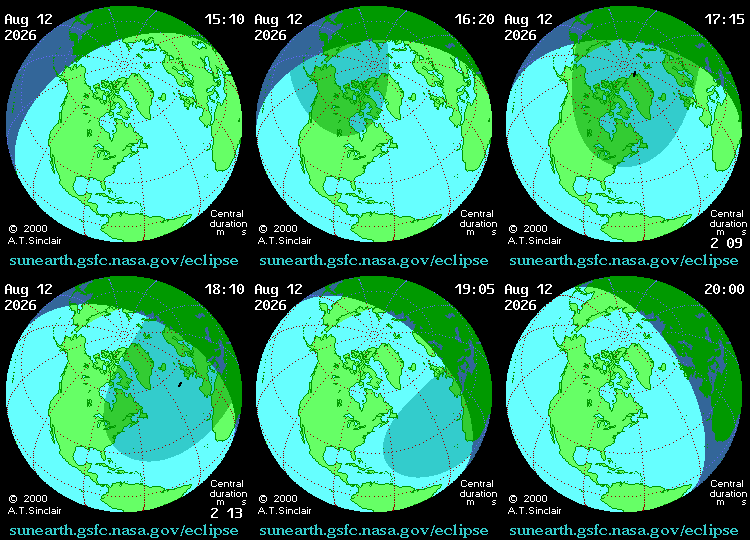
As many of you probably already know (and if not, you’re about to find out right now), on August 12, 2026, the sky will treat us to a total solar eclipse. The phenomenon will be visible in the late afternoon, will last for about a couple of minutes, and can be observed from several areas of Europe, including Iceland, Spain, and the Balearic Islands.
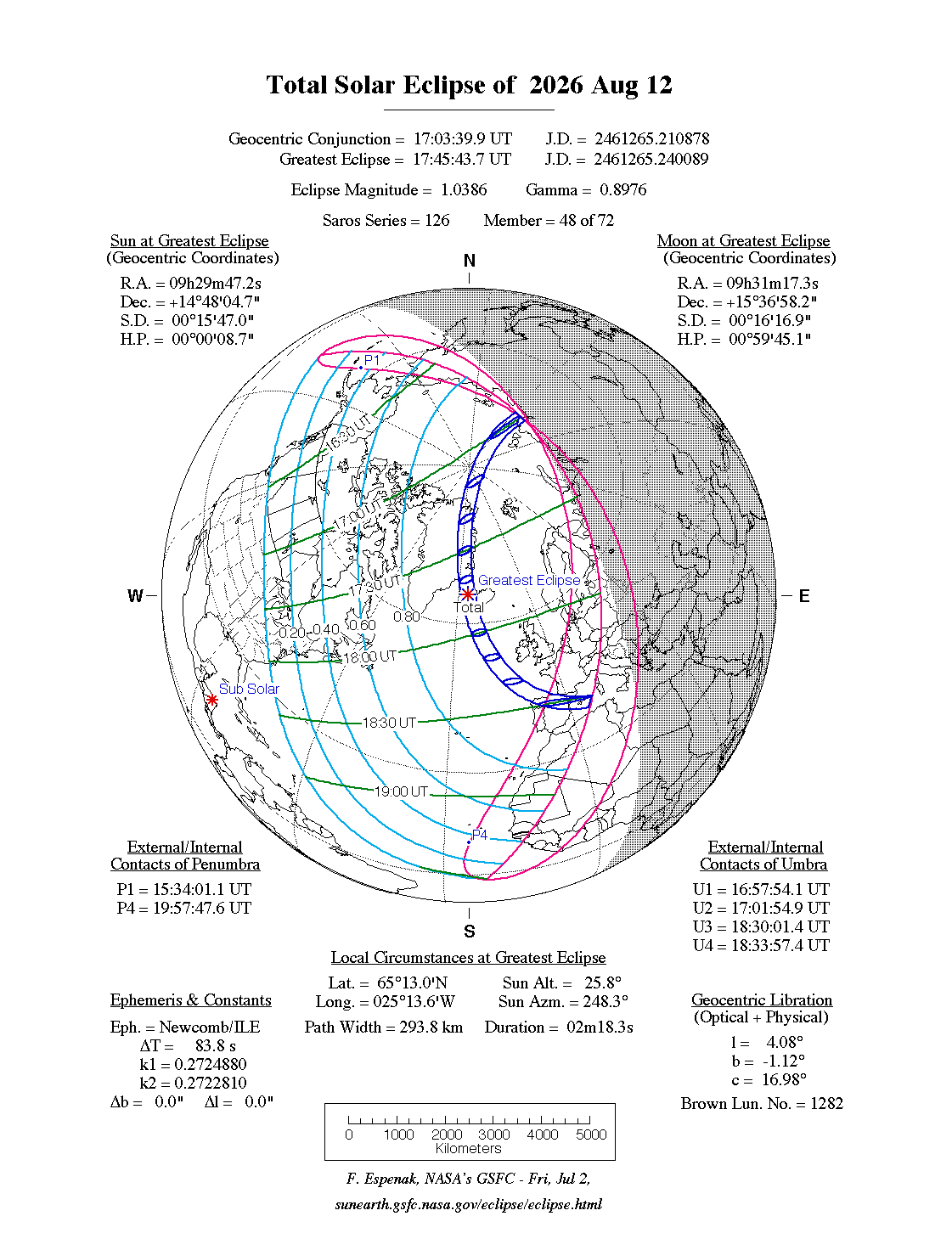
Image 1 Eclipse Predictions by Fred Espenak, NASA's GSFC - http://eclipse.gsfc.nasa.gov/
Why is the so-called path of totality so narrow and limited to only certain areas of Earth? The answer lies in the relative positions of the Sun, Earth, and Moon.
For a solar eclipse to occur, the Moon must be perfectly aligned between the Earth and the Sun, casting its shadow onto Earth’s surface. The length of the eclipse path is mainly determined by the relative speed of the Earth and Moon, as well as the precise alignment of these three celestial bodies.
The width of the path of totality, on the other hand, depends primarily on the distance between the Moon and Earth. This distance is not constant, but varies from about 363,000 km to approximately 405,000 km.
When a total eclipse occurs while the Moon is at its closest point to Earth, its disk appears larger in the sky and the path of totality can reach nearly 270 km in width. If instead the Moon is at its greatest distance from Earth, its apparent diameter becomes slightly smaller than that of the Sun. In this case, an annular eclipse occurs, in which a thin ring of sunlight remains visible around the Moon even at maximum alignment.

Partial or annular eclipses, compared to totality, make a substantial difference when it comes to solar eclipses.
Even the smallest visible portion of the solar disk is enough to take away what could truly be called the real “wow effect” of a total eclipse.
During totality, extraordinary phenomena occur: the sky darkens as if it were nighttime, stars and planets become visible in broad daylight, the temperature noticeably drops often accompanied by a characteristic “cold” gust of wind, while animals may display unusual and unexpected behavior.
But above all, what is missing during a partial or annular eclipse is the view of the so-called black Sun: the solar disk completely obscured by the Moon, surrounded by the faint and spectacular glow of the solar corona. And it is precisely during those few minutes that even the smallest telescope can reveal one of the most fascinating sights in astronomy: solar prominences, immense tongues of incandescent gas emerging from the edge of the Sun.
(Please note: the Sun must always be observed using proper certified solar filters to avoid the risk of permanent eye damage.)
Image 3 Total solar eclipse over the Andes, 2 July 2019 https://assets.science.nasa.gov/dynamicimage/assets/science/psd/solar/internal_resources/5563/Andes_Eclipse.jpeg
Our real fortune is that we live in an era in which total solar eclipses can still be observed in such a spectacular way. All of this is possible thanks to a truly unique astronomical coincidence: as seen from Earth, the Sun and the Moon appear to have almost the same apparent diameter.
If this were not the case, the experience would be completely different. With a Moon apparently larger than the Sun, the corona and solar prominences would remain hidden; with a smaller Moon, we would witness only annular eclipses, certainly fascinating, but lacking the complete darkness and the spectacular structures of the solar corona. And it would take a variation of less than 10% in the Earth-Moon distance compared to today to completely change this scenario.
Moreover, the Moon is slowly moving away from Earth. In the distant past, it therefore appeared larger in the sky than the Sun, while in the distant future its apparent diameter will gradually become smaller.
In both cases, the spectacular total solar eclipses that we are fortunate enough to observe today would not exist.
And while we prepare to observe the eclipse on August 12, don’t forget that on August 2, 2027, another remarkable solar eclipse will take place: total along a path crossing southern Spain, North Africa, and parts of the Middle East, with some of the best viewing locations situated between Gibraltar and Egypt, where totality will last for more than 6 minutes.
Two extraordinary opportunities to experience one of the most fascinating astronomical phenomena visible in the sky firsthand.
To observe the Sun safely, always remember to use certified equipment specifically designed for solar observation. On our website, you will find a selection of products dedicated to eclipses, including solar viewing glasses, filters, and accessories designed to help you enjoy this spectacular astronomical event at its best.